
In this series, we unpack the latest data from a national AD survey and share winning plays for dealing with the pressures of the athletic department.
ADs are responsible for more than ever before — and it shows
Every issue we've covered in this series, coaches, parents, funding, facilities, compliance, risk, eventually lands on one desk: yours. Additional responsibilities are climbing faster than any other concern in the country right now, and that tells you something about where this profession is headed if we don't address it directly.
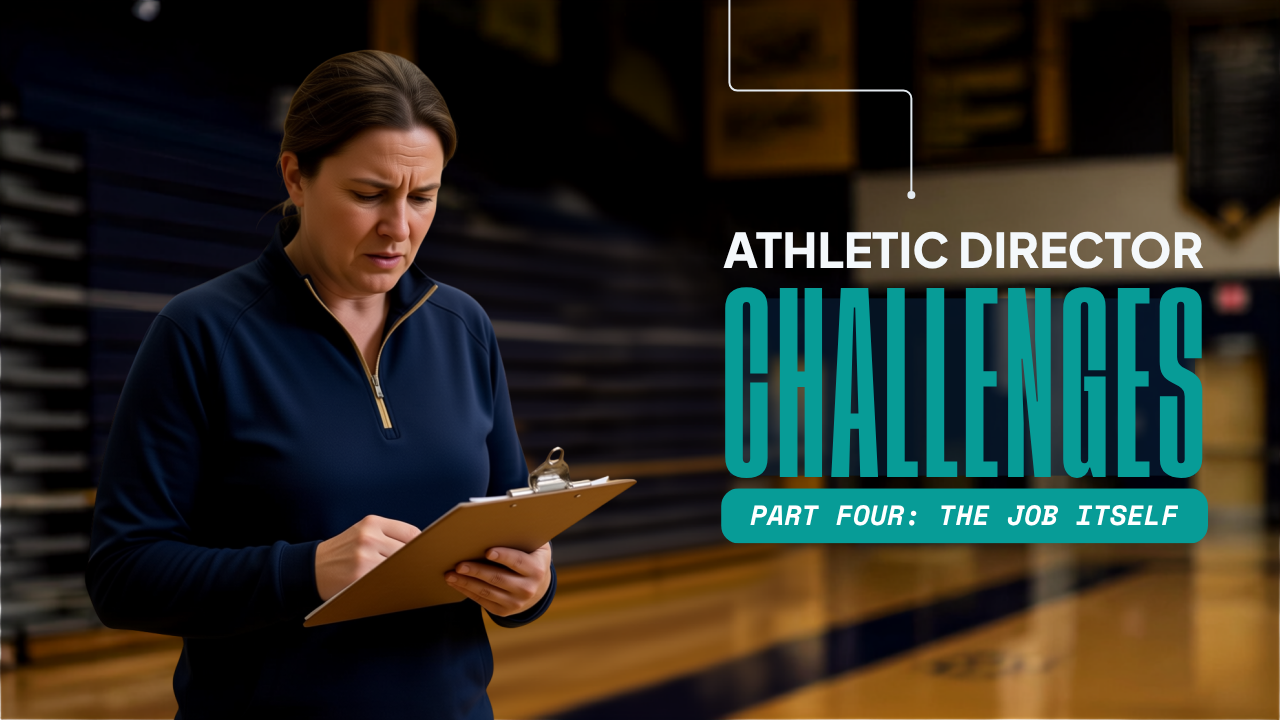
This is Part 4, the final installment of our series on the state of the AD profession, based on Coach & Athletic Director's 15th annual Athletic Director Survey, published in the magazine's May/June 2026 State of the Industry report.
We're closing out with the job itself: burnout, participation decline, communication and technology, and job security, before landing on the bigger picture of why this work is still worth it.
Additional responsibilities and the burnout factor
This is the fastest riser on the entire list. That tells you everything about where this profession is headed if we don't address it. ADs are absorbing facilities management, transportation, compliance, marketing, and technology on top of the job they were actually hired to do.
Delegate on purpose. Not because you don't trust your people, but because you cannot be the guardian of the front porch and the person fixing the scoreboard bulb at the same time. Build a leadership team around you, even an informal one.
Protect reflection time like it's a game you can't afford to lose. Block it on your calendar. Treat it as non-negotiable. The best ADs I know schedule thinking time the same way they schedule a varsity contest.
ADs are absorbing facilities management, transportation, compliance, marketing, and technology on top of the job they were actually hired to do.
Lean on your network. This is the entire reason state and national athletic administrator associations exist. You are not supposed to solve every new problem from scratch. Someone in our profession has already solved it. Borrow their belief until you build your own.
Stop running your department across six disconnected logins. I'll say the obvious part out loud because someone has to. The single biggest time-suck for most ADs is administrative busywork, scheduling in one app, forms in another, communication in a third, tickets in a fourth.
Consolidating that into one connected system is not a luxury anymore. It's how you get two hours of your evening back to actually go be present at your kid's own game for once.
Download Platform Comparison Guide
Participation decline
Fewer kids are walking through the door in a lot of buildings, and that has ripple effects on funding, roster depth, and school culture.
Meet kids where their interests already are. The top ten sports ADs expect to add in the next three years — tennis, lacrosse, bowling, wrestling, archery — tell a clear story. Kids want variety and lower barriers to entry. Alternative and emerging sports are not a threat to your traditional programs. They are a bridge for kids who never saw themselves as athletes before.
Promote like you mean it. Open houses, social content, and personal invitations from coaches and current athletes still outperform a flyer taped to a hallway wall. Programs that give families an easy digital front door — using something like Bound's Activity Registration to sign up, clear, and get placed on a roster in minutes instead of weeks — remove one of the quiet barriers that keeps hesitant families from ever trying out in the first place.
Encourage multi-sport participation instead of early specialization. The data backs this up and so does every college coach I've ever talked to. Well-rounded athletes stick around longer and burn out less. Athlete specialization is climbing as a concern for a reason. Kids who play one sport year round are more likely to get hurt and more likely to quit entirely by tenth grade. Talk to your coaches about sharing athletes across seasons instead of guarding them.
Communication and keeping up with technology
Communication is climbing. Technology concerns are actually dropping, which I read as good news. It means more ADs are finally finding tools that fit instead of fighting new software every season.
Pick one system of record, not five. The number one communication complaint I hear from parents and coaches is not that they got too much information. It's that they got conflicting information from different platforms. One source of truth changes everything.
ADs are finally finding tools that fit instead of fighting new software every season.
Over-communicate the good news, not just the logistics. Wins, recognition, and community stories build goodwill you can spend later when you need patience during a tough decision. A mobile app that puts your entire community, athletes, parents, and fans on the same page in real time turns your program into the place people check first, not last.
I'm not saying technology solves parental behavior or funding shortfalls on its own. I am saying it gives you back the hours to actually go solve those things face to face, which is where real leadership happens anyway.
Job security and difficult administration
Job security ranks as the lowest concern on the entire list, which honestly might be the most encouraging data point in this whole conversation. It tells me that when ADs build strong programs, strong relationships, and strong data, the seat gets more stable, not less.
Invest in the relationship with your building and district leadership before you need something from them. Regular updates, shared wins, and honest conversations about challenges build the trust that protects you when times get tough.
Keep receipts on your impact. Participation numbers, academic eligibility rates, community engagement, revenue generated. When your value is documented and easy to pull up, your job security follows. This is where having every number already organized in one platform saves you when you're asked to defend your program on short notice, instead of building a report from scratch under pressure.
The struggle is the gift
Here's what I keep coming back to: every single issue in this article has a strategy attached to it. None of them require you to be a superhero. They require you to build systems, build relationships, and stop trying to row this boat alone.
The profession is demanding more of us every year. Additional responsibilities are climbing faster than any other concern in the country, and that doesn't happen in a vacuum. But the ADs who are thriving right now, not just surviving, are the ones who figured out early that leadership means building a team around the mission and using the right tools so your time goes toward people instead of paperwork.
You're the coach of the coaches, the guardian of the front porch, and the one everyone calls when something goes wrong.
I've sat in the chair. I know how heavy it gets. This is, without question, one of the toughest positions in a school district.
You're the coach of the coaches, the guardian of the front porch, and the one everyone calls when something goes wrong, all before you've even had your coffee. I've faced my share of struggles in this role, more than I can count, and I've also come to believe it's the most rewarding job in education, because nowhere else do you get this many chances in a single day to positively impact the life of a kid, a coach, or a family.
You did not get into this profession because it was easy. You got into it because you believe in what education-based athletics does for kids. That belief is still the most powerful tool in your office. Borrow it on the hard days if you have to.
The struggle is the gift. Now let's go solve it, together.
If you're wrestling with any of this and want to talk it through, I'm here to help. Reach out anytime.
Go be great.